
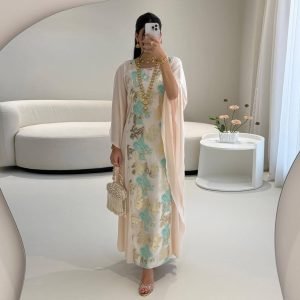
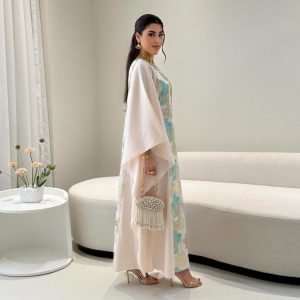
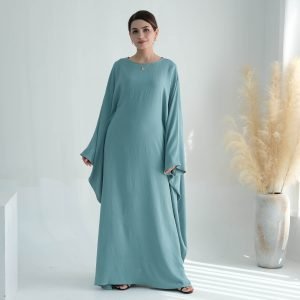
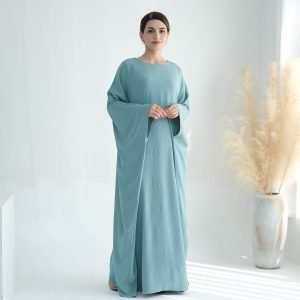
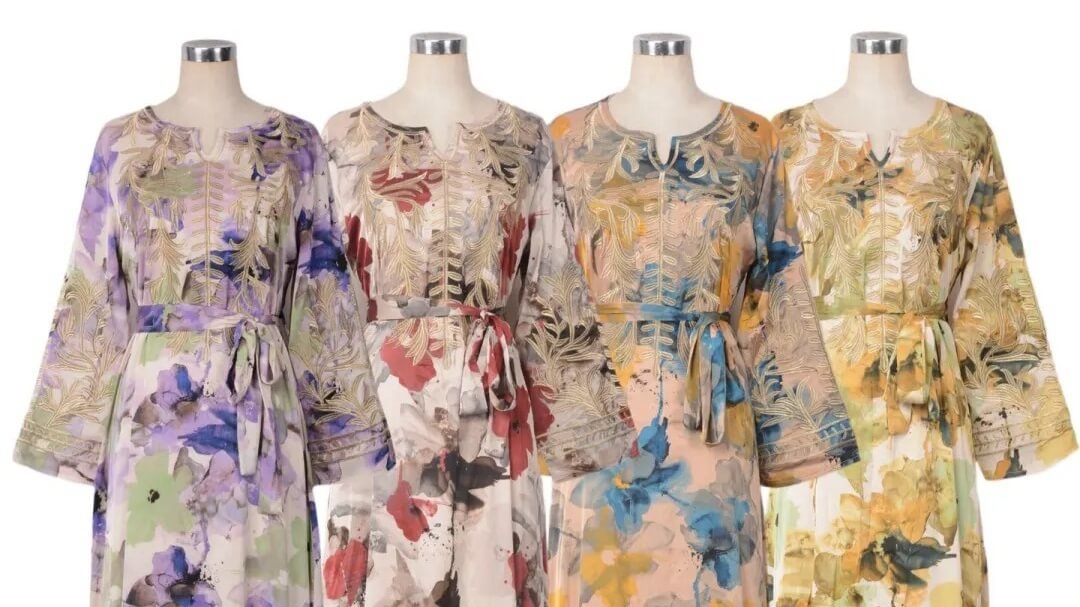
The basic principles of dress for Muslim women
If you’ve ever wondered why Muslim women dress the way they do, here’s a reminder: only the hands, feet, and face should be visible. Some follow the letter of this law, others the spirit.
Whichever end of the spectrum they find themselves at, though, there’s a greater sense of confidence and style—especially among younger women who are becoming more experimental with their look.
The breakthrough attempts of the new generation of designers
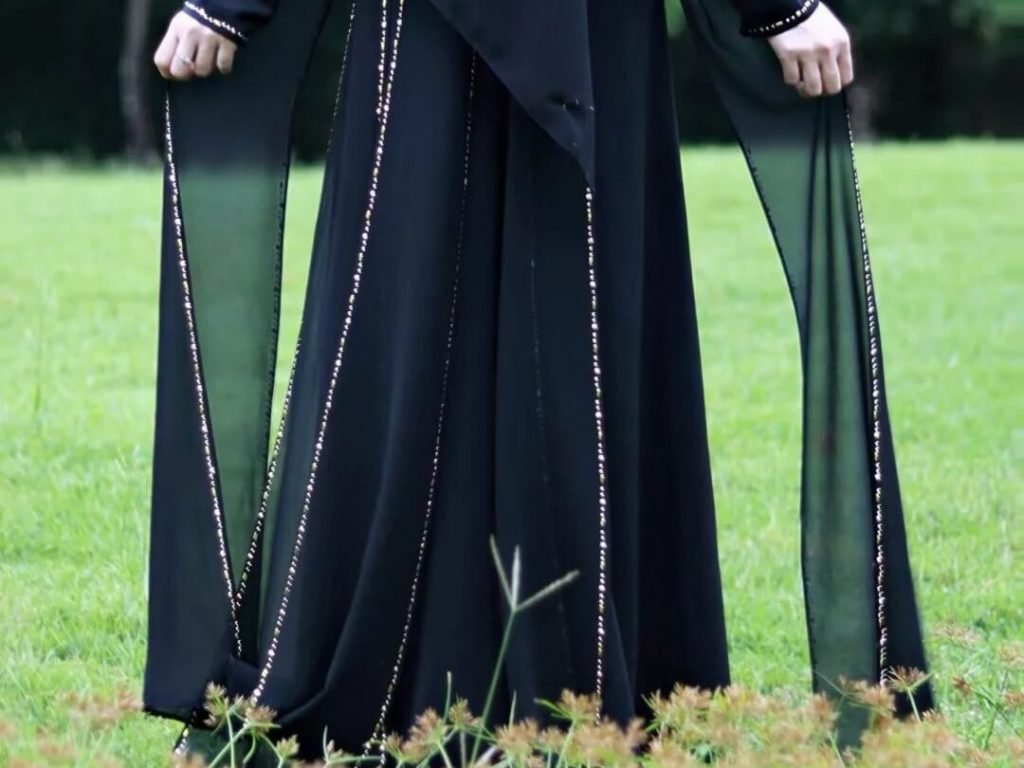
I was in London’s East End for the launch of a new Islamic fashion label from Nour. She’s a young up-and-coming designer who wants to prove that there’s more to Islamic fashion than hijabs, abayas, and jilbabs.
So she’s not selling us shares—she’s in fact trying to promote a range of streetwear.
“I really think it’s something that Western customers will buy as well.”
The message is like: this brand is for you. I mean, I wanted to make this brand for the Muslim. I want them to look at the clothing and say: I understand it, I get it. But at the same time, I hope they’re just nice graphics that ordinary people can like as well.
The development of our Butterfly Abaya store
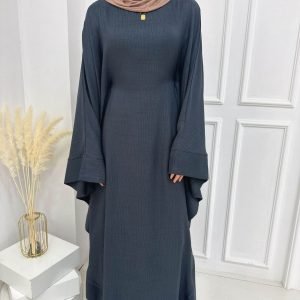
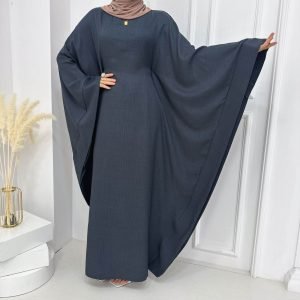
Nour said: “When I started this butterfly abaya store a year and a half ago, I mean I don’t know what’s popped up since—because I’ve been sort of in my own world doing this on my sewing machine in my garage, basically making some butterfly abaya and all that.
There are some online butterfly abaya shops who kind of source from other brands—clothes which happen to be baggy, happen to kind of cover you up properly—but there wasn’t a brand that was actually specifically making things tailored for the Muslim audience.”
Even non-Muslim girls love our Butterfly Abaya dress
“I love the design and I think I would generally wear it. I think this is modest as well. So I just think it’s fabulous.” one of our happy customers said.
Our abaya designs incorporate some modern elements
There are two extremes: one where it’s all completely Islamic—they’ve got the jilbabs and stuff like that, and they put in a bit of modern twist into it.
But with us, it’s totally like—you know, these butterfly abayas, I think anyone can wear these clothes. It’s not necessarily true that all Western people want to have like low-cut tops and short cuts. Not all the time anyway.
You can’t have it all out all the time. It’s kind of like something you can wear anytime really.
I’m very, very pleased because it’s better to be covered. A young Muslim woman, especially one who covers, won’t copy looks straight from the pages of fashion magazines—she’s more likely to think about how she can adapt it so it’s more Islamic.
The impact of social media on Muslim women
This is where blogs and social networking sites really help, giving hijabis around the world a chance to swap ideas.
Some people will say, ‘No, trousers are wrong, we only wear skirts.’ Fine, okay, I’ll post skirts, I’ll post dresses—that’s okay. But I try to cater to everyone in the wider sense. I try to create a feel of inclusion as opposed to exclusion. I think we’ve had enough of that, to be honest. We don’t want a really negative atmosphere.
I mean, it’s enough that people vilify you for wearing the scarf—whether it be the media or people on the road and stuff. I don’t think, when you come to a place that’s dedicated to hijab and only hijab, you need that kind of negative feel on the blog. So I try to keep it all clean, positive, constructive—as it were.